
From classroom setback to scientific success: WSSU alumnus, Antentor Hinton Jr., returns as convocation speaker
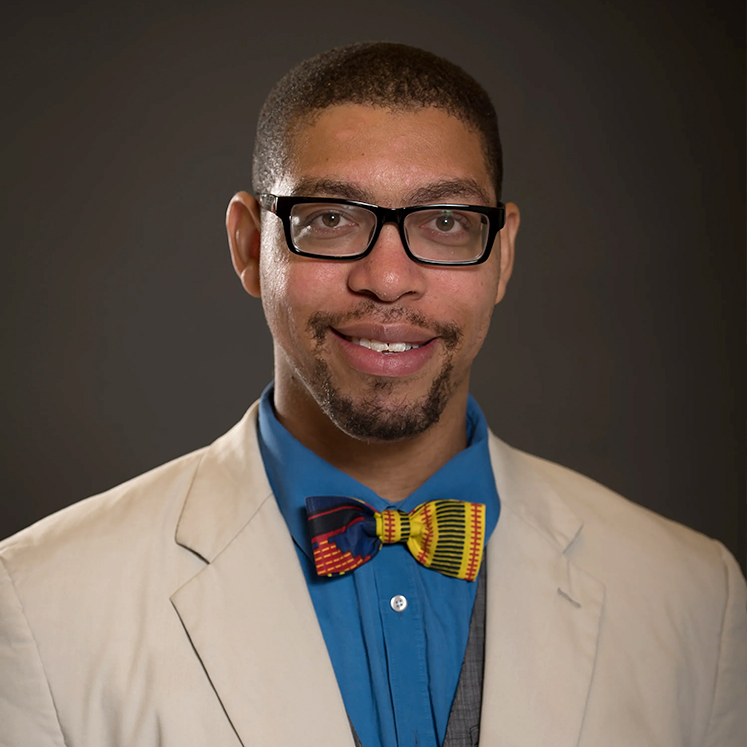
Ironically, getting kicked out of class one day at Winston-Salem State University helped set Dr. Antentor “A.J.” Hinton Jr. on a path that would lead to a career as a scientist, researcher, author, speaker and mentor.
Hinton, who earned his bachelor’s degree in biology from WSSU in 2010, is an assistant professor at Vanderbilt University, where he runs a laboratory studying mitochondria and their role in diseases and aging.
Yet that career might have gone in a much different direction without a tough conversation with former WSSU professor Dr. Morris Clarke.
An Asheville native, Hinton will be the speaker for WSSU's Founder's Day Convocation, which begins at 9:45 a.m. Friday in the Gallery Room of the Benton Convention Center.
As a freshman, Hinton was trying to decide whether to major in nursing or biology. He was also a member of the WSSU tennis team and spent considerable time practicing taekwondo, in which he was internationally ranked, and karate, in which he holds a third-degree black belt.
One day, after Hinton arrived late to Clarke’s biological inquiry class following tennis practice, Clarke told him to leave the classroom and wait in the hallway.
When class ended, Clarke spoke frankly with the student in whom he saw tremendous untapped potential.
“He said, ‘It’s great that you’re good at those things, but you can do more in your life to help people,’” Hinton recalled.
Clarke told Hinton he needed to choose between nursing and biology and encouraged him to spend less time on the tennis court and practicing martial arts. He then took Hinton to his office and called his mother, a nurse at a VA hospital, to tell her he was late to class.
But Clarke also offered Hinton an opportunity that would change his life: He suggested Hinton remain on campus over the summer to participate in WSSU’s Summer Undergraduate Research Experience, or SURE, program.
That summer, Hinton dissected the brains of mice. “It was fascinating to me,” he recalled. “I knew this was what I wanted to do.”
Research became Hinton’s passion. He declared biology as his major and joined Beta Beta Beta, a national honor society for students of the biological sciences.
He also found mentors at WSSU who would help shape his future. Dr. Haysetta Shuler, a student development liaison in biological sciences, helped him develop his leadership skills. Dr. Azeez Aileru, then director of WSSU’s Biomedical Research Infrastructure Center and MARC U*STAR program, also became a mentor. MARC U*STAR, a federally funded initiative of the National Institutes of Health, is designed to increase the number of students from underrepresented backgrounds who pursue and complete Ph.D. or M.D./Ph.D. degrees in biomedical and behavioral sciences.
“Dr. Clarke introduced me to Dr. Shuler to develop leadership qualities,” Hinton said. “She made sure I could get to a higher level.”
Clarke also taught Hinton how to present his research. After Hinton spent a summer at Duke University studying DELLA proteins, Clarke helped him prepare his research poster.
“Dr. Clarke taught me how to present my poster, and that changed everything for me,” Hinton said.
Hinton ultimately followed the advice of Clarke and Aileru and pursued a 24-month appointment as a MARC U*STAR scholar.
“I got to see a new side of research with more travel and many opportunities,” he said. “I met many Black scientists at events throughout the country.”
Hinton says his WSSU classmates and fellow science students also influenced him. Several went on to become pharmacists, physicians and dentists.
“During that time, I felt it was a great period to be at Winston-Salem State,” he said. “The people I knew in the sciences were all committed and are doing well right now.”
After graduating from WSSU, Hinton completed post-baccalaureate work at Baylor College of Medicine in Houston and earned his Ph.D. in integrative molecular and biomedical sciences in 2016. He later held research appointments and fellowships at the University of Iowa and Mayo Clinic before joining the Vanderbilt faculty.
At Vanderbilt, Hinton’s laboratory investigates how cellular stress affects the structure and function of mitochondria and other cellular components, with implications for conditions including diabetes, cardiovascular disease and aging. His work also examines how changes in mitochondrial shape may improve the understanding and diagnosis of disease.
Hinton chose Vanderbilt not only for its reputation and research resources, but also for its proximity to Fisk University, Tennessee State University and Meharry Medical College, historically Black institutions in Nashville.
Several graduates of those institutions have worked in his laboratory. Hinton also has received support from the United Negro College Fund and Bristol Myers Squibb, as well as a five-year Chan Zuckerberg Initiative grant. The initiative was founded by Facebook co-founder Mark Zuckerberg and his wife, pediatrician Priscilla Chan. Vanderbilt reported the grant as $1.5 million and said it was intended to increase diversity in STEM research.
Hinton has made mentoring a central part of his own career. His laboratory says he has mentored more than 100 individuals, including undergraduate and graduate students, postdoctoral fellows and others.
That commitment is particularly important to Hinton because of the underrepresentation of Black scientists in the life sciences. In 2023, Black or African American scientists represented about 3% of U.S.-residing employed doctoral scientists in the biological, agricultural and environmental life sciences, according to the National Science Foundation.
Hinton said his career has taught him the value of thinking differently and questioning accepted methods.
“I had to learn that the best scientists are not always the most popular,” he said. “Unique thinking can provide different results. I’ve learned it’s OK to be different.”
Hinton lives with his husband, Edgar Garza Lopez-Hinton, who is also a research scientist.
Perhaps the best measure of his success is not the grants, awards or recognition he’s received, but what he has chosen to do with the lessons he learned early in his career.
The professor who once sent him into the hallway ultimately helped Hinton discover a passion for research – and a desire to help others find their own paths.
“WSSU really changed my life in so many ways,” Hinton said. “I met so many people with different thought processes. Dr. Clarke really opened my mind to think of things in different ways.”

